After a Heart Attack: How to Lower Your Risk of Having Another One
After a heart attack, secondary prevention is what lowers the risk of the next one. A cardiologist's guide to LDL targets, antiplatelet therapy, beta blockers, cardiac rehab, exercise, diet, smoking, blood pressure, and the numbers worth tracking.


Surviving a heart attack is a major turning point in one's life. The blocked artery may have been opened with a stent or bypass surgery, but the work has only begun when you leave the hospital.
A stent treats a blockage. It does not remove the tendency to form plaque in other parts of the arteries in the heart. You also must work to keep your stent healthy in the long run!
The steps taken after a heart attack are called secondary prevention. The goal is to prevent another heart attack, stroke, heart-failure hospitalization, or cardiovascular death.
Fortunately, many of the most effective treatments are within reach. The key is knowing which numbers matter, taking the right medications consistently, and building habits that can last.
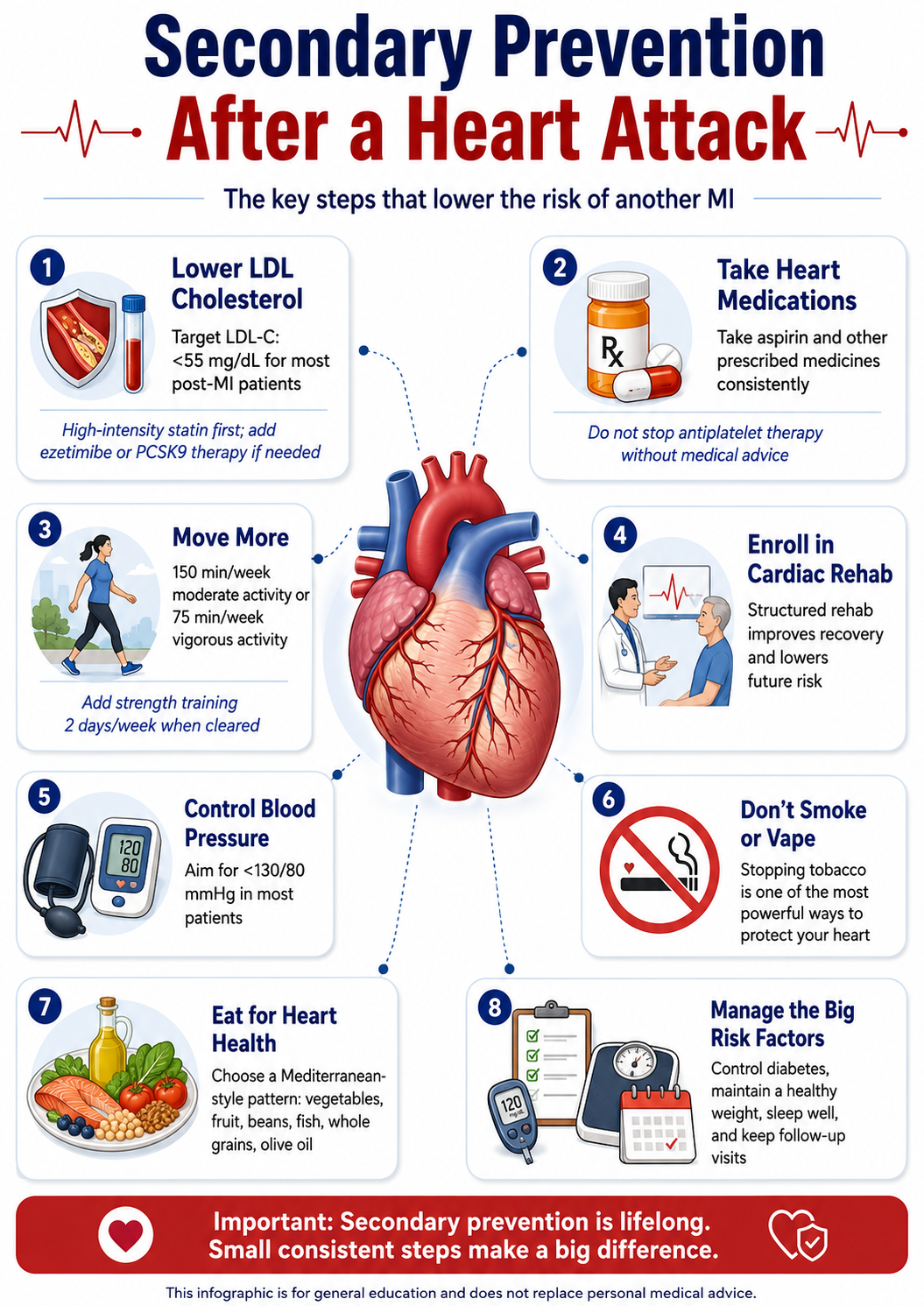
What is secondary prevention?
Primary prevention means preventing a first cardiovascular event.
Secondary prevention means preventing another event in someone who already has cardiovascular disease. This includes people who have had:
- A heart attack
- A coronary stent
- Bypass surgery
- A stroke caused by atherosclerosis
- Peripheral artery disease
- Significant cholesterol plaque in the coronary arteries
Once someone has had a heart attack, the risk calculator or calcium score is no longer the main issue. We already know that the person is at high cardiovascular risk. The focus must shift from estimating risk to lowering it.
What should my LDL cholesterol be after a heart attack?
For most people who have had a heart attack, the current LDL cholesterol goal is:
LDL below 55 mg/dL
The 2026 American cholesterol guideline recommends an LDL-C below 55 mg/dL for people at very high risk of another cardiovascular event. Most patients with a previous heart attack will fall into this category.
A smaller group of patients with cardiovascular disease who are not considered very high risk may have a goal below 70 mg/dL. After an MI, however, it is reasonable to ask your cardiologist whether 55 mg/dL should be your target. The guideline also recommends a non-HDL cholesterol goal below 85 mg/dL for very-high-risk patients.
These are not "dangerously low" cholesterol levels. Clinical trials of intensive LDL lowering have found that lower LDL levels continue to reduce cardiovascular events, without a clear safety signal from achieving very low levels in appropriately treated patients. It is important to sustain these low levels consistently over years to truly receive the benefit.
The general principle is:
Lower LDL for longer provides greater protection.
Why is the LDL target so low?
LDL particles enter the artery wall and contribute to plaque formation.
Lowering LDL does more than change a laboratory number. It reduces the amount of cholesterol available to enter plaque and helps stabilize existing plaque so that it is less likely to rupture and cause another heart attack.
A person whose untreated LDL was 160 mg/dL may feel pleased when it falls to 90. That is meaningful progress, but 90 is still well above the recommended target after a heart attack.
The goal is not simply to show improvement. The goal is to reach a level associated with the lowest practical risk.
How is LDL lowered after a heart attack?
Start with a high-intensity statin
Most patients are prescribed a high-intensity statin, usually:
- Atorvastatin (Lipitor)
- Rosuvastatin (Crestor)
Statins have decades of evidence showing that they reduce recurrent heart attacks, strokes, and cardiovascular deaths.
A high-intensity statin generally lowers LDL by at least 50%, but the exact response differs from person to person.
Add another medication when needed
Many patients will not reach an LDL below 55 with a statin alone. That does not mean the statin has failed. It means combination treatment may be needed.
Options include:
- Ezetimibe (Zetia): A daily tablet that reduces cholesterol absorption in the intestine. It commonly lowers LDL by an additional 15% to 25%.
- PCSK9 inhibitors (Repatha, Praluent): Injectable medications such as evolocumab (Repatha) or alirocumab (Praluent). These can lower LDL by approximately 50% to 60% and have been shown to reduce cardiovascular events.
- Bempedoic acid (Nexilet): An oral medication that can be useful when additional LDL lowering is needed, particularly in some patients who cannot tolerate adequate statin doses.
- Inclisiran (Leqvio): An injection given initially, again at three months, and then every six months. It produces substantial LDL lowering and may be helpful when adherence to more frequent medication is difficult.
Treatment does not always need to move slowly from one medication to the next. If the starting LDL is far above the target, beginning combination therapy early may make sense.
When should cholesterol be checked again?
A fasting lipid panel should generally be checked four to eight weeks after starting or changing cholesterol medication.
This answers three important questions:
- Is the medication being taken consistently?
- Has LDL fallen as expected?
- Has the patient reached the treatment goal?
Waiting a year to recheck an LDL of 120 after a heart attack is far too long. The first months after an MI are a period when risk remains high and treatment should be actively adjusted.
Once the LDL is stable and at goal, it can usually be monitored at longer intervals.
Do I have to stay on aspirin and another blood thinner?
After a heart attack, especially one treated with a stent, many patients are prescribed two antiplatelet medications:
- Aspirin
- A P2Y12 inhibitor, such as clopidogrel, ticagrelor, or prasugrel
For patients who are not at high risk of bleeding, the default treatment after an acute coronary syndrome is usually 2 antiplatelet medications for at least 12 months. Following this, the aspirin is usually continued life-long.
Some patients need a shorter course of 2 medications because of bleeding risk. Others may benefit from longer or modified treatment because of a high risk of clotting.
This decision depends on:
- The type of heart attack
- Whether a stent was placed
- The complexity of the stent procedure
- Previous bleeding
- Age and kidney function
- Whether anticoagulation is also needed
- The balance between clotting and bleeding risk
Do not stop either antiplatelet medication without speaking with the cardiology team, especially if you are being planned for an elective outpatient surgery right after your heart attack. Stopping too early after a stent can lead to a life-threatening stent clot.
Does everyone need a beta blocker forever?
Not necessarily.
Beta blockers are especially important after a heart attack when a patient has:
- Reduced heart-pumping function
- Heart failure
- Angina
- Certain abnormal heart rhythms
- Another clear reason for beta-blocker treatment
For patients whose heart-pumping function is normal and who have no angina, arrhythmia, or other indication, the benefit of continuing a beta blocker indefinitely is less certain in the modern treatment era.
Current chronic coronary disease guidance recommends reassessing the need for long-term beta-blocker therapy after the first year rather than assuming that every patient must take it for life.
Do not stop it suddenly. Beta blockers usually need to be reduced gradually under medical guidance.
What other medications may protect the heart?
The medication list should be personalized. Depending on heart pump function and other medical conditions, treatment may include:
- An ACE inhibitor or ARB
- A mineralocorticoid receptor antagonist
- An SGLT2 inhibitor
- A GLP-1 receptor agonist
- Medication for blood pressure
- Medication for angina
- Treatment for elevated triglycerides in selected patients
People with diabetes, chronic kidney disease, heart failure, or reduced heart-pumping function may gain additional protection from specific medications beyond their effect on blood sugar or blood pressure.
For patients with established cardiovascular disease and overweight or obesity, modern weight-management treatment may also reduce cardiovascular risk. In the SELECT trial, semaglutide (Wegovy, Ozempic or Rybelsus) reduced the combined risk of cardiovascular death, nonfatal heart attack, or nonfatal stroke in patients with cardiovascular disease and overweight or obesity who did not have diabetes.
These medications are not appropriate for everyone, but weight treatment is now part of cardiovascular risk treatment—not simply a cosmetic issue.
How important is cardiac rehabilitation?
Cardiac rehabilitation is one of the most effective and underused treatments after a heart attack.
It is not merely a supervised gym class.
A comprehensive cardiac-rehabilitation program usually includes:
- A personalized exercise plan
- Blood-pressure and heart-rate monitoring
- Nutrition counseling
- Medication education
- Smoking-cessation support
- Diabetes and weight management
- Help with stress, anxiety, and depression
- Guidance about returning to work and normal activities
A contemporary review of 85 randomized trials involving more than 23,000 patients found that exercise-based cardiac rehabilitation was associated with:
- A 26% lower risk of cardiovascular death
- A 23% lower risk of hospitalization
- An 18% lower risk of another heart attack
That is a treatment effect worth taking seriously.
The 2025 acute coronary syndrome guideline recommends referral to cardiac rehabilitation after hospital discharge. When attending a center is difficult, professionally supported home-based or virtual programs may provide a reasonable alternative.
If you were not referred at discharge, ask your cardiologist for a referral during clinic follow-up.
How much exercise should I do after a heart attack?
The long-term goal for most stable patients is:
- At least 150 minutes of moderate-intensity aerobic activity each week, or
- At least 75 minutes of vigorous activity each week, or
- A safe combination of the two
In addition, resistance/weight training is generally recommended on at least two days per week once the patient has been cleared and taught proper technique.
Moderate activity means that you are breathing harder but can still speak in sentences. Examples include brisk walking, cycling at a comfortable pace, water aerobics, or using an elliptical machine.
You do not need to complete all 150 minutes at once. Thirty minutes on five days per week works well, but shorter sessions also count.
The best exercise plan is not the most impressive one. It is the one you can repeat next week.
How soon can I start exercising?
Light movement often begins soon after an uncomplicated heart attack, sometimes before leaving the hospital. The pace of progression depends on:
- The size of the heart attack
- Heart-pumping function
- Whether a stent or bypass surgery was performed
- Ongoing chest discomfort
- Abnormal heart rhythms
- Blood-pressure response
- Other medical conditions
Cardiac rehabilitation is the safest place to establish an exercise prescription.
For many people, the progression looks something like this:
- Begin with several short walks each day.
- Increase the duration before increasing the speed.
- Build toward 20 to 30 minutes of continuous activity.
- Add resistance exercise after medical clearance.
- Progress to more vigorous exercise only when it is safe.
There is no need to go from hospital bed to boot camp. The heart appreciates consistency more than theatrics. We will discuss this more in a separate article.
Should I lift weights?
In most stable patients, yes—after clearance.
Resistance training can improve:
- Strength
- Balance
- Blood pressure
- Blood-sugar control
- Body composition
- Ability to perform everyday activities
Begin with light resistance and controlled movements. Avoid holding your breath while lifting. Breath-holding can cause a sudden rise in blood pressure.
A cardiac-rehabilitation team can help determine the right starting weight, number of repetitions, and progression.
Patients with uncontrolled blood pressure, active chest pain, unstable heart failure, certain rhythm problems, or recent surgical restrictions may need to delay resistance training.
Is sitting all day harmful even if I exercise?
Long periods of sitting should be broken up whenever possible.
A person may complete a 30-minute walk and still spend the remaining 15 waking hours almost completely inactive.
Try to stand, stretch, or walk briefly every 30 to 60 minutes. These small movement breaks are not a replacement for exercise, but they reduce prolonged sedentary time and make an active day easier to achieve. Look to achieve at least 7,000 steps daily, preferably up to 10,000 steps every day.
When should I stop exercising?
Stop and seek medical advice if exercise causes:
- Chest pressure, heaviness, or burning
- Unusual shortness of breath
- Dizziness or near-fainting
- A sustained racing or irregular heartbeat
- A sudden fall in exercise capacity
- Extreme fatigue out of proportion to the activity
Call 911 for chest discomfort that is severe, persistent, or similar to the previous heart attack—especially if it is accompanied by sweating, nausea, shortness of breath, or pain spreading to the arm, jaw, shoulder, or back.
Do not drive yourself to the hospital.
What should I eat after a heart attack?
A Mediterranean-style eating pattern has some of the best evidence for people with coronary disease.
Build most meals around:
- Vegetables
- Fruit
- Beans and lentils
- Whole grains
- Nuts and seeds
- Fish
- Olive oil and other unsaturated fats
Reduce:
- Processed meats
- Sugary drinks
- Refined carbohydrates
- Deep-fried foods
- Foods high in trans fat
- Excess saturated fat
- Highly processed snack foods
- Excess sodium
In the CORDIOPREV randomized trial, people with established coronary heart disease assigned to a Mediterranean diet had fewer major cardiovascular events over seven years than those assigned to a low-fat diet.
A heart-healthy diet is not a punishment diet. It should still look and taste like food.
Do supplements prevent another heart attack?
Most over-the-counter vitamins and supplements have not been shown to prevent recurrent cardiovascular events.
Routine nonprescription fish-oil capsules, antioxidant vitamins, and similar supplements should not replace proven treatment.
Some prescription therapies may be appropriate for specific patients, but "natural" does not automatically mean effective, harmless, or compatible with antiplatelet medications.
Tell your clinician about every supplement you take.
How important is quitting smoking?
It is one of the most powerful steps a person can take.
Continuing to smoke after a cardiovascular event increases the risk of another event and death. People who quit have a meaningfully lower risk than those who continue.
This includes cigarettes, cigars, and other combustible tobacco. Vaping is not considered a harmless cardiovascular alternative.
Effective treatment may include:
- Nicotine-replacement therapy
- Varenicline
- Bupropion
- Behavioral counseling
- A combination of medication and support
A relapse is not a moral failure. It is a sign that the treatment plan needs strengthening.
Avoiding second-hand smoke matters too.
What should my blood pressure be?
For most patients with coronary disease, a blood-pressure goal below 130/80 mm Hg is appropriate when it can be reached safely.
Blood pressure should be measured correctly:
- Sit quietly for 3-5 minutes first.
- Keep both feet on the floor.
- Support the back and arm.
- Use the correct cuff size for your arm.
- Avoid caffeine, exercise, and smoking shortly beforehand.
Home readings are often more useful than a single rushed office measurement.
Treatment should be individualized in people who develop dizziness, falls, kidney problems, or very low diastolic pressure.
What about diabetes?
Diabetes significantly increases the risk of another cardiovascular event.
Treatment should address more than the A1C number. Certain SGLT2 inhibitors and GLP-1 receptor agonists provide cardiovascular or kidney benefits in appropriate patients.
Blood-sugar goals should be individualized according to age, other medical conditions, risk of low blood sugar, and life expectancy.
People without diabetes should still have glucose or A1C checked periodically, particularly if they have overweight, obesity, a family history of diabetes, or previously elevated blood sugar.
Does sleep matter?
Yes.
Poor sleep can worsen blood pressure, appetite, glucose control, weight, mood, and medication adherence.
Most adults should aim for seven to nine hours of sleep when possible.
Loud snoring, witnessed breathing pauses, morning headaches, daytime sleepiness, or difficult-to-control blood pressure may suggest sleep apnea. Treating sleep apnea can improve symptoms and blood-pressure control, although it should be part of a broader prevention plan rather than viewed as a stand-alone cure for coronary disease.
What about stress and depression?
Anxiety is common after a heart attack. So is depression.
Some patients become afraid to exercise, sleep, travel, have sex, or be alone. Others appear calm but quietly stop taking medications or attending appointments.
These reactions deserve attention.
Cardiac rehabilitation, counseling, appropriate medication, support groups, and honest conversations with family can all help. Treating mental health is part of treating the heart.
Do I need routine stress tests after a heart attack?
Not simply because time has passed.
Routine stress testing or repeated imaging is generally not recommended in a stable patient whose symptoms and activity level have not changed.
Testing may be appropriate if there is:
- New or worsening chest discomfort
- A clear decline in exercise capacity
- New shortness of breath
- A concerning rhythm problem
- A specific question about returning to strenuous work or exercise
Good follow-up is not measured by how many tests are ordered. It is measured by whether the right treatment targets are being reached.
What numbers should I know?
After a heart attack, keep track of:
- LDL cholesterol: Usually below 55 mg/dL
- Non-HDL cholesterol: Below 85 mg/dL for very-high-risk patients
- Blood pressure: Usually below 130/80 mm Hg
- Exercise: At least 150 minutes of moderate activity each week
- Resistance training: Usually two or more days each week after clearance
- Smoking: Zero
- Lipid recheck: Four to eight weeks after a medication change
Also know your heart's ejection fraction, whether you have diabetes or kidney disease, and how long you are expected to remain on each antiplatelet medication.
What should I ask at my next cardiology visit?
Consider asking:
- What is my LDL, and is my goal below 55?
- Do I need ezetimibe, a PCSK9 inhibitor, or another cholesterol medication?
- When should my lipid panel be repeated?
- How long should I take both antiplatelet medications?
- What is my heart's ejection fraction?
- Do I still need my beta blocker?
- Have I been referred to cardiac rehabilitation?
- What type and intensity of exercise are safe for me?
- Are my blood pressure, diabetes, weight, and smoking treatment plans strong enough?
The bottom line
Preventing another heart attack is not about finding one perfect food, supplement, or exercise.
It comes from putting several proven treatments together:
- Lower LDL aggressively
- Take antiplatelet medication as prescribed
- Attend cardiac rehabilitation
- Exercise regularly
- Stop smoking
- Control blood pressure and diabetes
- Eat a Mediterranean-style diet
- Treat excess weight when appropriate
- Keep follow-up appointments
- Speak up when a medication causes problems
This article is intended for general education and does not replace an individualized medical evaluation or treatment plan. Never start, stop, or change a cardiovascular medication without speaking with your healthcare professional.
Comments
No comments yet. Be the first to share your thoughts.
Sign in to join the conversation.
Sign In